
Filters and heat exchangers
Dirty fins quickly cost 10 to 25 per cent of capacity. Cleaning uses specialist foam, never a garden hose.
A well-kept system uses less power, does not smell and lasts 15 years or more.
Dirty fins quickly cost 10 to 25 per cent of capacity. Cleaning uses specialist foam, never a garden hose.
Damp evaporators and condensate trays breed germs. Disinfection also removes the typical musty smell.
Pressure and leak testing. A slow loss cuts capacity long before the system fails outright.
Terminals, current draw, drain and pump are checked before water runs down the wall.
The coarse dust filters in the indoor unit come out in a couple of minutes, rinse under lukewarm water and go back in dry. Every two to four weeks in summer – the single most effective thing you can do.
Also keep the outdoor unit clear: no leaves in the fins, no shrubs right in front, no snow drift in winter. Everything else – refrigerant circuit, evaporator cleaning, electrics – belongs in professional hands.
| Service | Interval | Guide price |
|---|---|---|
| Mono-split service | annual | €140–180 |
| Multi-split service (up to 3 indoor units) | annual | €190–280 |
| Hygiene clean with disinfection | every 1–2 years | €90–160 per indoor unit |
| Fault finding | as needed | from €95 call-out and first hour |
| Leak testing, commercial systems | statutory, by charge size | time and material |
Above a certain refrigerant charge, systems fall under testing and record-keeping duties in the EU regulation on fluorinated greenhouse gases. Typical domestic systems stay below that threshold; commercial systems often sit above it.
Usually filters or heat exchangers are dirty; less often refrigerant is missing. If cleaning changes nothing, the drop points to a leak that has to be found and repaired. Topping up alone is not a fix.
Almost always a blocked condensate drain or insufficient fall. Switch the unit off immediately so water cannot reach the wall and the electrics.
Moisture on the evaporator. The dry or fan function after cooling helps; only a hygiene clean solves it for good.
Often loose bracket bolts, a dirty fan or worn anti-vibration mounts. A sudden louder hum can also point to the compressor and should be checked quickly.
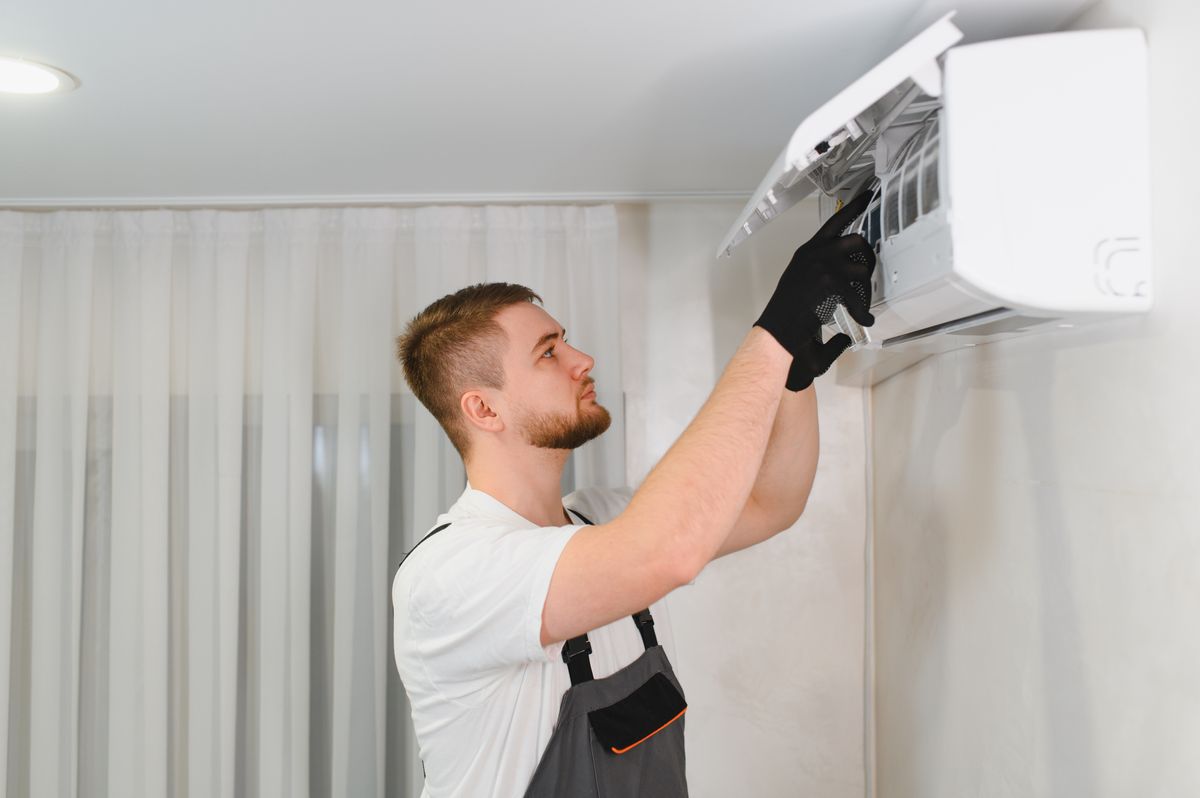
The engineer opens the indoor unit, cleans the filters and heat exchanger, disinfects the condensate tray and checks the drain. Refrigerant pressure, current draw and cycle times are then measured and compared with the commissioning figures.
Allow around an hour per unit. It prevents the two most common complaints: a musty smell on start-up, and water dripping from the unit.
Briefly describe the system and the problem. Urgent summer faults are prioritised.